For most, your eyes witness your entire life, making regular eye exams an even more important part of a health routine as you age. Our eye exams for adults and seniors can help you maintain your vision and can even offer a glimpse into your overall wellness.
At our practice, we believe an eye exam is more than just a new glasses prescription. It’s a proactive step you can take to protect your eye health, catch potential issues early, and preserve your quality of life. Your vision is connected to your independence, safety, and your ability to enjoy the things you love: We want to help keep a close eye on it together.
How Your Vision Changes as You Age
It’s common to notice shifts in your vision over time. The transparent lenses in your eyes can become less flexible, and other natural changes can affect how well you see. These shifts often happen gradually and are a normal part of life.
Common Vision Shifts After 65
You might start to notice little things that weren’t there before, which are often subtle signs that your eyes are changing. Here are a few common experiences:
- Needing more light to read or do detailed tasks
- Trouble with glare from headlights when driving at night
- Changes in how you see colour
- Difficulty with focus on close objects, a common condition known as presbyopia, which affects most people as they age
Common Eye Conditions and What to Look For
Some eye conditions become more frequent with age. A routine eye exam can spot these conditions early, often before you notice any symptoms. This gives you more options for effective eye disease diagnosis and management.
Cataracts
A cataract is a clouding of the eye’s natural lens that can make your vision feel like looking through a foggy window. It often develops slowly and can affect one or both eyes. Some signs include:
- Cloudy or blurry vision
- Faded colours
- Poor night vision
- Halos around lights
Glaucoma
Glaucoma is a term for a group of eye conditions that damage the optic nerve, which is the nerve that sends signals to your brain about what you’re seeing. The damage is often caused by high pressure in your eye. It usually has no early symptoms, which is why regular checks for glaucoma are so important.
Age-Related Macular Degeneration (AMD)
Age-related macular degeneration (AMD) affects your central vision, which you typically need for things like reading, driving, and seeing faces clearly. It damages a part of the retina (the back of your eye) called the macula. Symptoms can include:
- Blurry or distorted central vision
- Straight lines appear wavy
- A dark spot in the centre of your vision
Diabetic Retinopathy
This condition is a complication of diabetes and can affect the blood vessels in the retina. Anyone with type 1 or type 2 diabetes is at risk, making annual diabetic eye exams very important for prevention. Symptoms of diabetic retinopathy can include:
- Blurry vision
- Spots or “floaters” in your vision
- Dark or empty areas in your sight
What to Expect at Your Senior Eye Exam
Your visit is straightforward, focused on your health and comfort. An optometrist can guide you through each step to help get a complete picture of your eye health. Eye exam length does vary from person to person, so to help you plan your visit, you can learn more about how long an eye exam might take.
A Review of Your Health and Vision History
We can start with a chat about your general health, any medications you take, and any vision issues you’ve noticed. This conversation helps us tailor the exam to your specific needs. It’s a great time to ask any questions you might have.
Tests for Vision and Eye Health
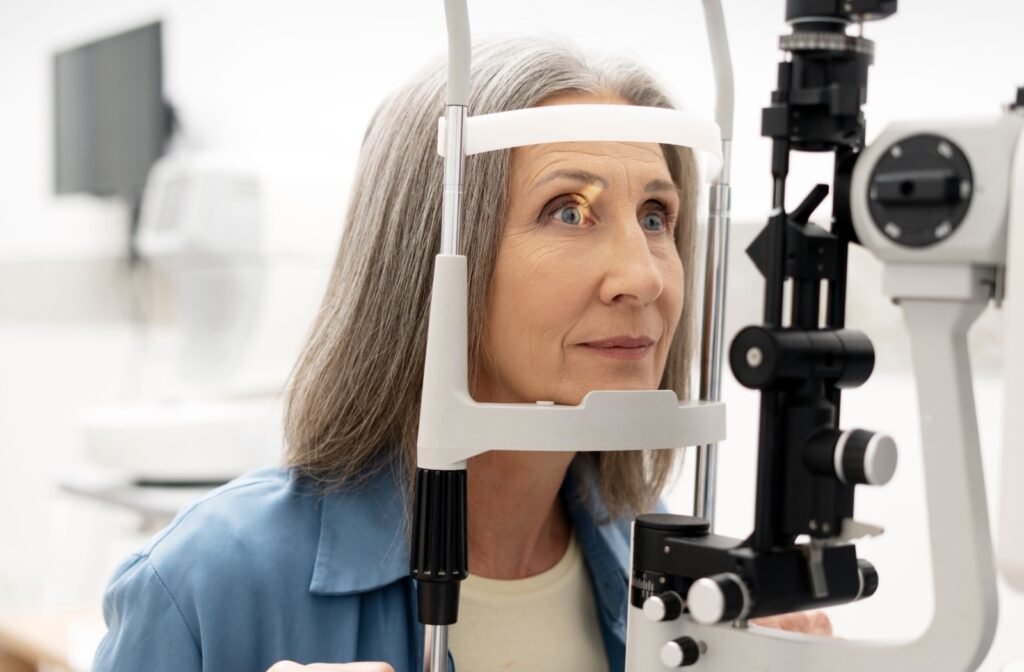
We can use a few simple tests to check your vision and the health of your eyes. These tests are usually very simple to perform and provide the optometrist with helpful information about your eyes. They may include:
- An eye chart test to check your sight at different distances
- A pressure test to check for signs of glaucoma
- A look at the back of your eye to inspect the retina and optic nerve, which may involve a dilated eye exam for a more thorough check
A Prescription Update
If you wear glasses or contacts, we may check your prescription. A small update could help you see more clearly and comfortably. We can discuss any changes with you and explain your options.
How Often You Need an Eye Exam
Regular check-ups are important for everyone, but the recommended frequency can change as you get older. Staying on schedule helps you keep on top of any changes to your vision or eye health. It’s one of the simplest ways to be proactive about your wellness.
Exam Frequency for Seniors Over 65
For adults 65 years and older, the Canadian Association of Optometrists generally recommends a complete eye exam at least once a year. Your optometrist may suggest a different schedule based on your personal health profile.
Eye Exams and Your Overall Health
An eye exam is not just about vision: Your eyes can reveal a lot about your general health. It’s a noninvasive way to check on what’s happening elsewhere in your body.
Detect Health Issues Before You Notice Symptoms
Through an eye exam, an optometrist can sometimes see early signs of other health conditions. These can include diabetes, high blood pressure, and high cholesterol. An eye exam can be one of the first places these changes are noticed, allowing you to address potential issues as they arise.
Maintain Your Quality of Life and Independence
Clear vision helps you stay safe, active, and independent. It allows you to read your favourite book, drive to visit family, and enjoy your hobbies with confidence. Regular eye exams support your ability to continue doing the things you love.
Look After Your Eyes Today
At The Eye Studio by Kennedy Eye Clinic, we believe that caring for your eyes is a powerful way to care for yourself. If it’s been a while since your last check-up, now is a great time to schedule one with an optometrist in Saskatoon, Saskatchewan. Book your appointment with us, and let us help you maintain your eye health.