
You schedule regular check-ups for your child’s overall health, but what about their eyes? A child’s vision is a huge part of how they learn and experience the world. Our team at The Eye Studio by Kennedy Eye Clinic knows that a children’s eye exam goes far beyond just reading letters on a chart; it’s a comprehensive look at their eye health and visual skills.
A pediatric eye exam is a key part of your child’s health care that supports their development, learning, and long-term well-being. Our team performs specific tests to assess not only clear vision but also eye alignment, muscle coordination, and the overall health of the eye structure.
Why Your Child Needs a Regular Eye Exam
A comprehensive eye exam is about more than just checking for 20/20 vision. It’s a foundational part of your child’s health care that can have a big impact on their growth and happiness.
Early Detection Makes a Difference
Many childhood vision problems show no obvious signs. You might not notice anything is off, but a small issue could be present. Regular exams can identify concerns early, when they are often easier to manage, helping set your child up for a lifetime of healthy sight.
Connect Vision and Learning
A significant portion of learning is visual, and an undetected vision problem can affect how your child reads, writes, and participates in class. Clear vision gives your child the tools they need to feel confident and succeed in school, and there are even myopia control options to help manage conditions that affect classroom learning.
Common Eye Conditions in Children
During the eye exam, your eye doctor looks for common pediatric eye conditions. These can affect how your child’s vision develops if they are not identified and addressed, including:
- Refractive errors: This group includes nearsightedness (trouble seeing far away), farsightedness (trouble seeing up close), and astigmatism (blurry vision at all distances).
- Amblyopia (lazy eye): This happens when one eye does not develop proper sight, causing the brain to favour the other eye.
- Strabismus (crossed eyes): This occurs when the eyes do not line up or work together as a team.
A Step-by-Step Guide to the Eye Exam
The goal is to make eye exams a positive experience for both you and your child. The process is designed to be comfortable, engaging, and easy to understand.
The Initial Chat
The appointment starts with a friendly conversation. Our team will ask about your child’s general health, any concerns you have noticed, and your family’s eye health history. This information helps create a complete picture of your child’s visual needs.
Fun Tests for Little Eyes
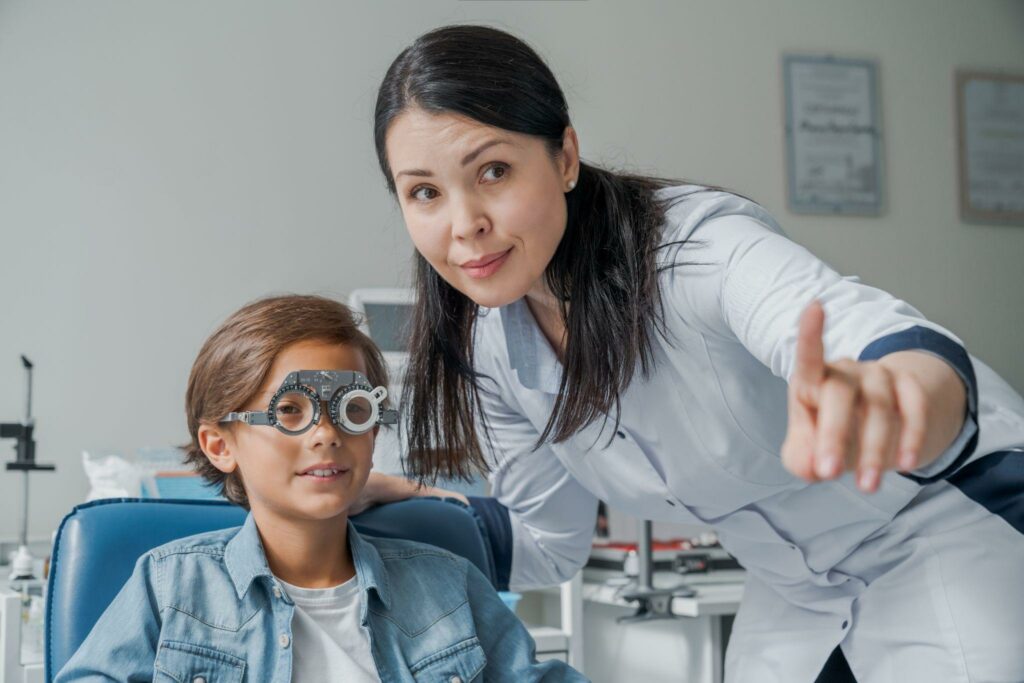
Instead of a traditional letter chart, the eye doctor often uses tests designed specifically for kids. Your child might be asked to identify pictures, follow a light with their eyes, or look at interesting shapes. These “games” help check vision sharpness, eye alignment, and depth perception in a fun way.
A Closer Look at Eye Health
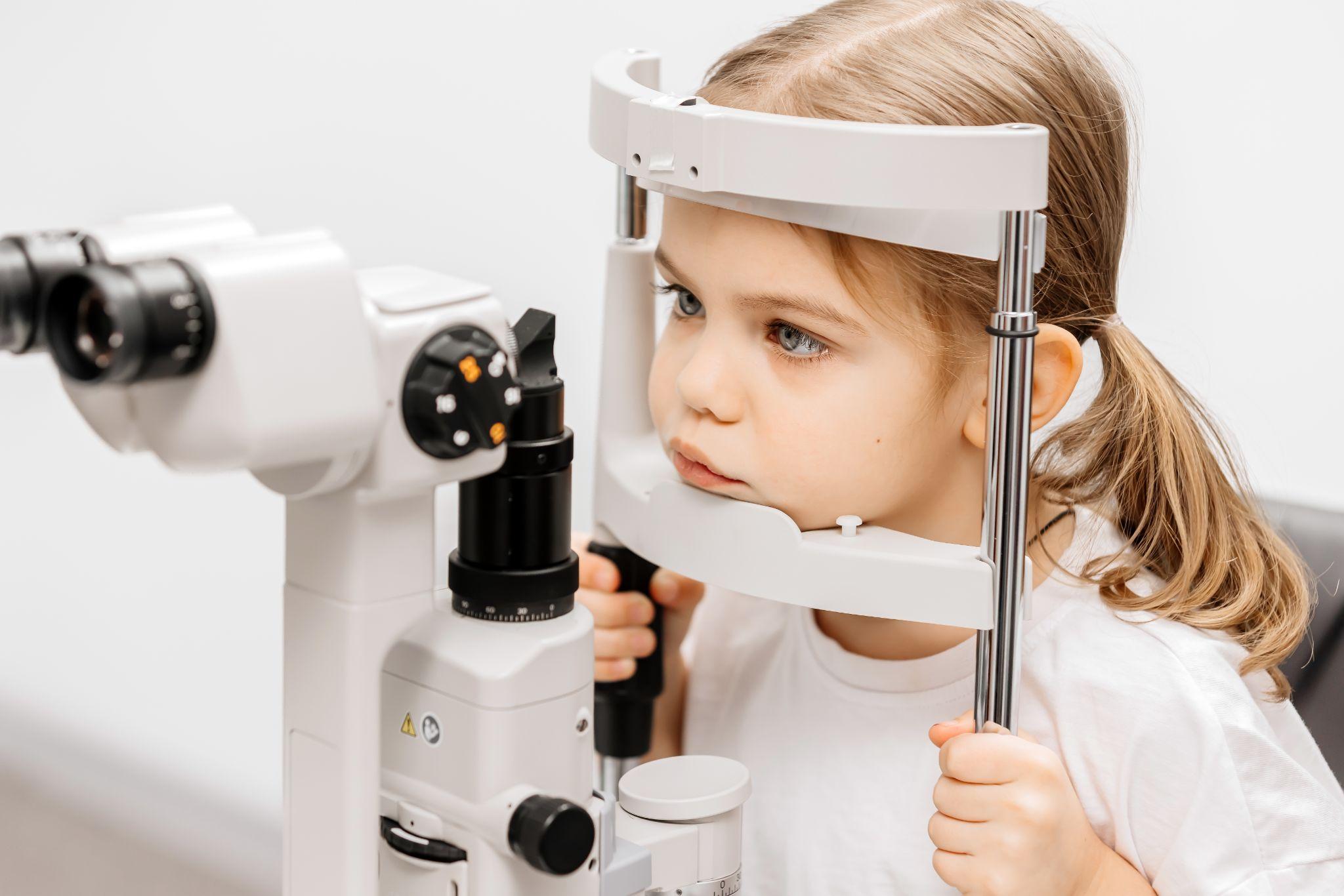
Your eye doctor uses special equipment to look at the health of your child’s eyes. One tool is a slit lamp, which is just a microscope with a bright light that allows our team to get a clear view of the front and back of the eye. The process is quick and comfortable.
How Long Does the Exam Take?
A typical pediatric eye exam lasts between 30 and 60 minutes, though the total time for an eye exam can vary. This gives our team enough time to be thorough and answer your questions without making you or your child feel rushed.
After the Exam: What Are the Next Steps?
Once the tests are complete, the optometrist goes over the results with you. You get a clear explanation of what everything means for your child’s vision and eye health.
Discuss the Results
You receive a summary of your child’s eye health and vision. This is a great time to ask any questions you may have. Our team wants you to feel fully informed and confident about your child’s care.
Choose Frames If Needed
If your child needs glasses, our team can help you find frames that are durable, comfortable, and a perfect fit for their personality. Finding a pair they love makes wearing glasses an exciting new adventure.
Schedule Your Next Visit
Based on the exam results, your eye doctor may recommend a schedule for future eye exams. Regular visits help monitor your child’s eye health and vision as they grow.
Protect Your Child’s Eyes Every Day
Good eye care habits start early. There are simple things you can do at home to help protect your child’s developing vision and keep their eyes comfortable.
The Importance of Sun Protection
Just like skin, young eyes need protection from the sun’s UV rays. Encourage your child to wear sunglasses that block 100% of UVA and UVB rays whenever they are outdoors. A wide-brimmed hat adds another layer of great protection for sunny days.
Manage Screen Time
Encourage frequent breaks from phones, tablets, and computers. A good guide is the 20-20-20 rule: every 20 minutes, have your child look at something 20 feet away for at least 20 seconds. This simple habit can help reduce digital eye strain.
Look for Signs of Vision Trouble
Between visits, you can watch for potential signs of a vision problem. Let your eye doctor know if you notice that your child:
- Squints frequently
- Tilts their head to see better
- Sits very close to the television or holds books close
- Rubs their eyes often
- Complains of headaches
Here for Your Family
An eye exam can give your child the foundation for a lifetime of healthy vision. Our team at The Eye Studio by Kennedy Eye Clinic is here to help you protect your child’s eye health and support their visual development. Schedule your child’s next appointment today.