
Key Takeaways
- Eye strain headaches can show up when the tiny focusing muscles in your eyes get tired.
- They often feel like a dull ache or pressure around your temples, forehead, or behind your eyes.
- Screens, small prescription changes, dry eye, and glare can all play a part.
- The 20-20-20 rule, a comfortable screen setup, and more blinking can help you find relief.
- An eye exam can help show whether your eyes are behind your headaches.
It’s 3 PM, your inbox is still full, and a dull ache has crept across your forehead. You squint at your screen, rub your eyes, and blame the coffee wearing off. Our team at The Eye Studio by Kennedy Eye Clinic hears about this kind of afternoon headache from people all over Saskatoon.
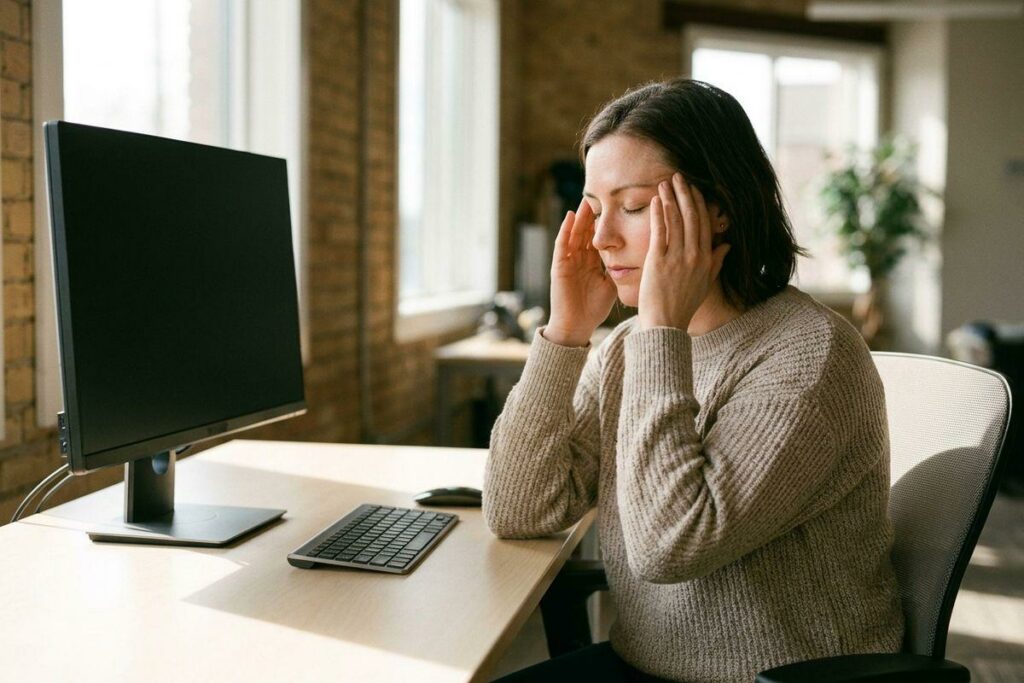
An eye strain headache usually feels like a slow, dull ache or pressure around your temples, forehead, or behind your eyes, and you can often ease it with regular screen breaks, a comfortable desk setup, and an up-to-date prescription. If the headaches keep coming back, a comprehensive eye exam with an optometrist in Saskatoon can help you get to the bottom of it.
What Is an Eye Strain Headache?
Your eyes have tiny focusing muscles that get tired, just like your legs after a long walk. After hours of reading, scrolling, or a long drive, your head can start to ache.
Not every headache starts with your eyes, though. Knowing the signs can help you sort out which kind you have.
What Does an Eye Strain Headache Feel Like?
Head and Eye Signs
Eye strain headaches tend to sneak up on you. Here’s what many people notice:
- A dull, achy headache builds slowly through the day.
- Pressure settles around your temples or across your forehead.
- An ache sits behind your eyes.
Other Signs to Watch For
Your body can send a few other clues, too. Watch for these signs:
- Your vision gets blurry, often more so by late afternoon.
- Bright light feels harsh.
- Your neck and shoulders feel tight.
Signs in Kids
Kids don’t always say their eyes feel tired. Instead, you might spot these signs:
- They get headaches after school, homework, or screen time.
- They rub their eyes or avoid reading.
- They have trouble staying focused in class.
What Leads to Headaches Behind the Eyes?
Screen Time and Near Work
When you stare at a screen, you blink less, which can dry out your eyes. Your eyes also stay locked on close-up focus for hours.
Add long stretches without a break, and those focusing muscles get worn out.
Vision Changes You May Not Notice
Your prescription can shift a little without you noticing. Even a small change can make your eyes work harder to keep things clear.
Your eyes also need to work together as a pair, which eye doctors call binocular vision. When they don’t team up well, focusing takes extra effort.
Dry eye can also play a part, making your vision drift in and out of focus.
Glare and Light Shifts
Sun glare bouncing off your screen can add to the strain. So can stepping from a bright, snowy sidewalk into a dim indoor room, which Saskatoon winters serve up often.
How to Relieve Eye Strain Headaches at Home
Try the 20-20-20 Rule
This simple habit gives your eyes a quick break from close-up focus. Try to follow these 3 steps:
- Every 20 minutes, look away from your screen.
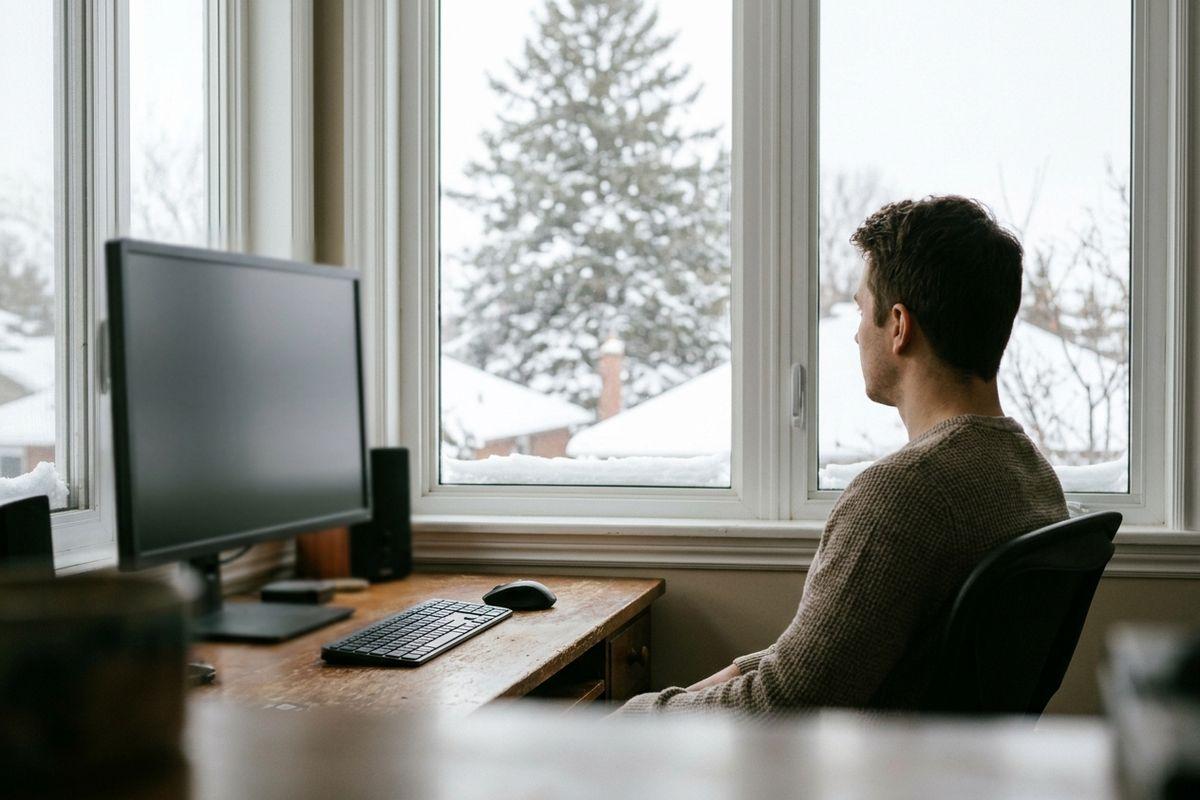
- Focus on something about 20 feet away, like a tree outside your window.
- Hold your gaze for 20 seconds.
Adjust Your Screen Setup
A few small changes at your desk can make a difference. Try these tweaks:
- Place your screen just below eye level, about an arm’s length away.
- Match screen brightness to the room, and close the blinds when glare hits.
- Bump up the font size instead of leaning in.
Give Your Eyes a Break
Remind yourself to blink more often during screen time.
Lubricating eye drops, often called artificial tears, can help when your eyes feel dry. A lunchtime walk also gives your eyes a change of scenery and something far away to look at.
When to See an Optometrist in Saskatoon
Signs It’s Time for an Eye Exam
Home tips can help, but some headaches need a closer look. Book an eye exam if you notice any of these signs:
- Your headaches show up often or keep getting worse.
- Pain relievers only help for a little while.
- Your vision is blurry, doubled, or has changed suddenly.
What Happens at Your Eye Exam
The optometrist checks your prescription for nearsightedness, farsightedness, and astigmatism. Nearsightedness makes faraway things look blurry. Farsightedness can make close-up things harder to see. Astigmatism can blur your vision at any distance.
The optometrist also looks at how well your eyes focus and work together. A check for dry eye and your overall eye health rounds out the visit.
Relief Options Your Eye Doctor May Suggest
An updated prescription can help make everyday vision more comfortable, whether you’re reading, driving, or working late.
If you need new glasses, the optician can fit them in person and help you find frames to suit your style and budget. If your eyes aren’t the source of your headaches, our team can give you clear guidance on next steps.
Book an Eye Exam
You don’t have to push through another afternoon of squinting and rubbing your temples. Dr. Kaitlyn Elash, Dr. Anna Matiko, and Dr. Justin Darroch can help you figure out what’s behind your headaches. Book your eye exam today, and take a few extra minutes to browse the frames during your visit.