Key Takeaways
- An eye exam can spot early changes in your eyes, sometimes before you notice anything different.
- Your optometrist can find glaucoma, cataracts, retina issues, dry eye, and focus problems.
- The blood vessels in your eyes can show signs of diabetes, high blood pressure, and other health conditions.
- Kids, teens, and adults each have a recommended exam schedule.
- Regular visits give your eye doctor past records to compare with.
Your eyes do a lot of quiet work, from reading menus to spotting a friend across a busy patio. At The Eye Studio by Kennedy Eye Clinic, our team sees every day how much an eye exam can tell you, well beyond whether you need new glasses.
An eye exam can help detect eye diseases like glaucoma, cataracts, and macular degeneration, plus signs of health conditions such as diabetes, high blood pressure, and high cholesterol. A comprehensive eye exam with an optometrist in Saskatoon gives you a clear look at both your vision and your overall health.
What Does an Eye Exam Check?
Your visit starts with a friendly chat. Your optometrist asks about your family history, your work, and your daily habits, like how many hours you spend on screens or outdoors.
If something needs a closer look, your optometrist in Saskatoon can refer you to a medical doctor or an ophthalmologist.
Tests Your Eye Doctor May Use
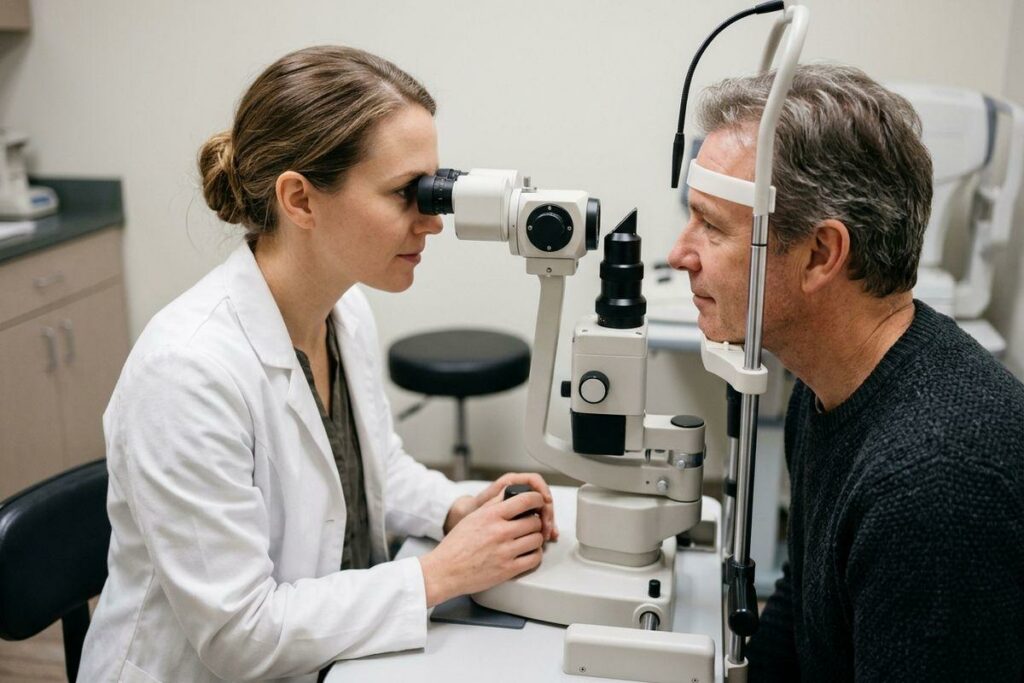
Your optometrist checks how sharply you see, measures the pressure inside your eyes, and assesses how your eye muscles work together.
Next comes a look at your retina, the light-sensitive tissue at the back of your eye. Sometimes your optometrist uses dilation, which means drops widen your pupil for a clearer view.
Eye Conditions an Eye Exam Can Find
Glaucoma and Cataracts
Glaucoma damages the optic nerve, the nerve carrying signals from your eye to your brain. It often shows no early symptoms, so you can feel completely fine while changes are underway. Catching it early often gives you more treatment options.
Cataracts happen when the eye’s internal lens turns cloudy over time. This can make your vision look cloudy or blurry, and your optometrist can detect it during an eye exam.
Retina Issues and Dry Eye
During the retina check, your optometrist can assess your vision for retinal tears, retinal detachment, and macular degeneration.
Dry eye can feel scratchy, burning, or gritty, like sand is stuck under your lids. Your optometrist checks how many tears you make and how good they are to help find the cause.
Focus and Eye Alignment Issues
Your exam also checks for nearsightedness, where distant things look blurry, and farsightedness, where focusing at near (and even distance sometimes) is difficult. Your optometrist looks for astigmatism, which can blur vision at different distances, and presbyopia, the age-related shift that makes up-close reading tougher.
We may also assess your vision for eye alignment issues like strabismus, where the eyes cross or point in different directions. In kids, early care can help avoid lazy eye, when vision in one eye doesn’t develop fully.
Health Conditions Your Eyes Can Reveal
Your eyes let your optometrist see your blood vessels directly, with no needles involved. That view can reveal a lot about the rest of your body.
Diabetes and High Blood Pressure
Diabetes can cause the blood vessels in your retina to leak or bleed. High blood pressure can affect those same vessels, along with your optic nerve, which is why an eye exam can reveal early signs of those conditions.
High Cholesterol and Autoimmune Conditions
In some cases, high cholesterol may show up as a greyish-white ring around your cornea, the clear front part of your eye.
Multiple sclerosis can lead to swelling of the optic nerve. Rheumatoid arthritis and lupus may also show signs in your eyes.
Signs to Book an Eye Exam Sooner
Some changes are worth a visit before your regular checkup. Book a prompt appointment if you notice any of these signs:
- Sudden flashes of light.
- A sudden increase in floaters (spots, specks, or cobweb-like shapes).
- A dark curtain or shadow moving across your vision.
- Sudden loss or significant blurring of vision.
- Sudden double vision.
How Often Should You Get an Eye Exam?
How often you need an eye exam depends on your age and your health.
Kids and Teens
Kids’ eyes change quickly as they grow. Here’s a general schedule for children and teens:
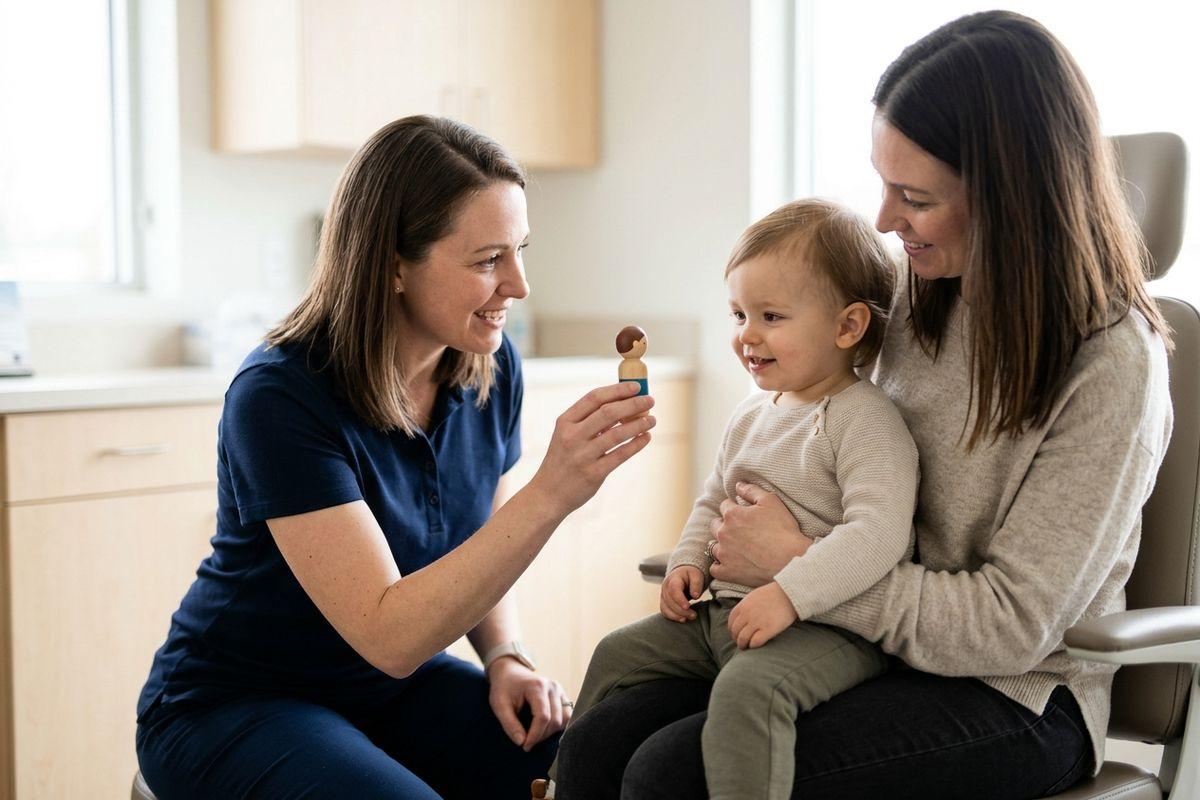
- Babies can have their first eye exam between 6 and 9 months of age.
- Kids ages 2 to 5 need at least 1 eye exam.
- Kids and teens ages 6 to 17 benefit from a yearly eye exam.
Adults
For adults, the recommended timing shifts with each stage of life:
- Adults ages 18 to 64 are generally recommended to have a visit every 2 years. Yearly eye exams are recommended if you are diabetic, a contact lens wearer, or being monitored for any eye disease.
- Adults 65+ benefit from a yearly eye exam, as they are at a higher risk of eye conditions.
Regular Visits with Your Optometrist in Saskatoon
Your own history can change these timelines. If glaucoma runs in your family, your optometrist may suggest more frequent visits. Past records let your optometrist compare this year’s results with earlier ones and spot changes sooner.
Local, in-person care also means your whole family sees familiar faces, from your toddler’s first checkup to your parents’ yearly visits.
Book an Eye Exam in Saskatoon
The Eye Studio by Kennedy Eye Clinic sits on 8th Street near Broadway Avenue, a quick trip from Nutana, Riversdale, Lakeview, and Stonebridge. After your exam, our optical team can help you browse a fun mix of frames with options for every budget. Book your eye exam today and find out what your eyes have to say.