
Key Takeaways
- Atropine is a plant-based medication that has been used in eye care for years, including as dilating drops during an eye exam.
- Low-dose atropine is studied as a way to help slow myopia progression in children.
- Common low-dose strengths include 0.01%, 0.025%, and 0.05%, usually one drop per eye at bedtime.
- Glasses or contacts are often still needed while using the drops.
- Side effects can include light sensitivity, larger pupils, and blur up close.
- An optometrist can pair drops with other myopia control options and track changes over time.
You pick up your child’s new glasses in the fall, and by spring, they are squinting at the whiteboard again. That yearly jump in prescription is what myopia control aims to slow down, and atropine eye drops are one of the tools your optometrist in Saskatoon may talk with you about.
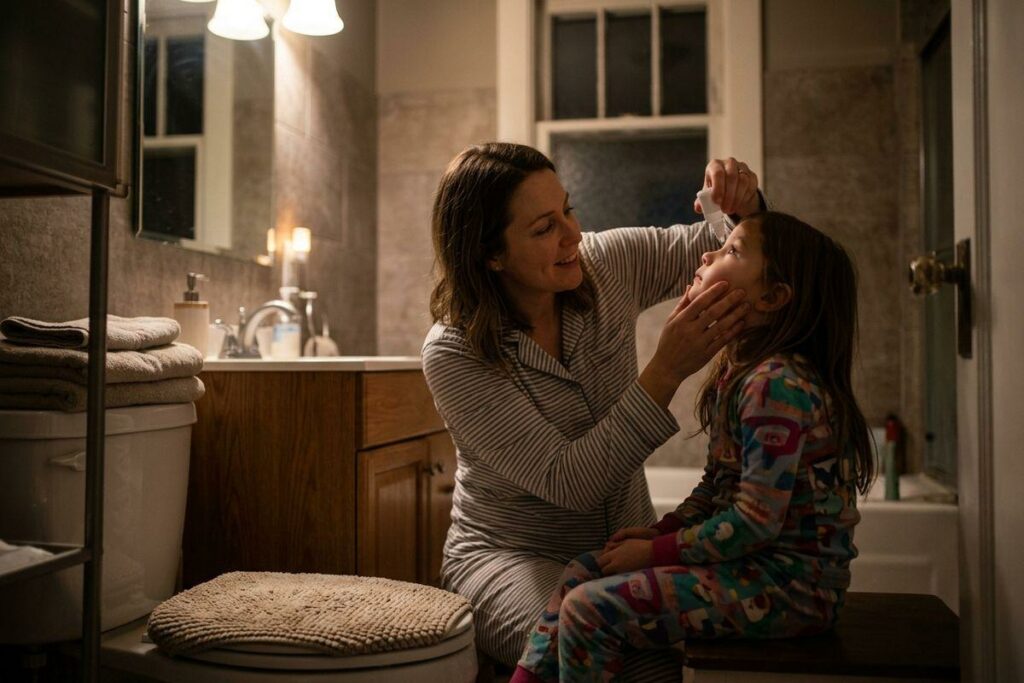
Low-dose atropine eye drops are used to help slow the progression of a child’s myopia by slowing the growth of the eye, and they’re usually applied as one drop per eye at bedtime.
What Are Atropine Eye Drops?
Atropine is a plant-based medication with a long history in eye care. You may have already seen it in action without knowing the name. It’s the same family of drops used to dilate the pupils during an eye exam so your eye doctor can get a clear look inside the eye.
For myopia, a much weaker version is used. Researchers have spent years studying these low-dose formulas in children, and that work is what brought atropine into the conversation about slowing nearsightedness.
How Atropine Can Slow Myopia Progression in Kids
The exact mechanism still isn’t fully understood. Researchers think atropine acts on the retina at the back of the eye and the sclera, the white outer wall of the eye.
The goal is to slow the rate at which the eye grows, not to undo the myopia already there, as that is not possible. Your child’s current prescription stays where it is, and the hope is that it climbs more slowly from there.
What the Research Suggests
Two well-known studies, ATOM2 and LAMP, looked at low concentrations of atropine in children. Both point toward a slower change in prescription over time compared with no treatment.
Drops don’t sharpen distance vision on their own, so your child will typically still wear glasses or contacts every day.
How the Drops Are Used
Low-dose atropine typically comes in 3 strengths: 0.01%, 0.025%, and 0.05%. Your eye doctor picks a starting point based on your child’s age, prescription history, and how quickly things have been shifting.
The routine itself is simple. One drop in each eye at bedtime, most nights, tucked into the same spot as brushing teeth. Bedtime helps because any blur or light sensitivity happens while your child sleeps. Higher concentrations have been linked with more side effects, which is why the low-dose versions get the attention.
How Long Treatment Usually Lasts
Many children stay on drops through their growth years, when prescriptions tend to shift the fastest.
Progression can resume after stopping, so your eye doctor plans the timing with you rather than setting an arbitrary end date. Follow-up visits track both the prescription and the length of the eye, which gives a clearer picture than the prescription alone.
Side Effects and Safety Questions Parents Ask
Low-dose atropine is generally well tolerated, though some children notice changes. Keep an eye out for a few things:
- Light sensitivity, especially outdoors on bright days
- Slightly larger pupils
- Blur when looking at close-up work like books or tablets
- Mild redness or itching around the eye
Questions about storage, expiry, and how to handle the bottle are worth bringing up with your pharmacist at the start, since the answers can vary depending on how the drops are prepared.
Who May Not Be a Good Fit
Certain eye conditions and medication histories can rule atropine out, which is why your eye doctor reviews all of that before writing anything down.
For children who do use the drops and find bright days uncomfortable, sunglasses or tinted lenses can make outdoor time easier.
How an Optometrist in Saskatoon Builds a Myopia Plan
A plan starts with a child’s eye exam and a review of past prescriptions.
From there, drops can be used on their own or paired with other options, such as ortho-k, myopia-control lenses, or soft contacts. Habits at home matter too. More outdoor time and reasonable breaks from screens are part of the conversation, not an afterthought.
Come See Us
If your child’s prescription has been climbing and you’d like to talk through the options, our team at The Eye Studio by Kennedy Eye Clinic can walk you through what a myopia plan could look like. Book an appointment and bring your questions along.