
Your child got glasses last year, and now the letters on the classroom board look fuzzy again. A new prescription every school year is a pattern plenty of parents start to notice. Myopia tends to build quietly while kids adapt without saying much about it.
You can help slow myopia progression in children with myopia control glasses, specialty contact lenses, ortho-k, or low-dose atropine drops, combined with daily habits like outdoor time and balanced screen use. Which approach fits depends on your child’s age, their routine, and what they’ll actually wear every day.
What Myopia Means for Your Child’s Eyes
Myopia, better known as nearsightedness, makes distant objects look blurry while close-up work stays sharp. Your child might read a book on the couch without any trouble and still miss a street sign from the back seat.
It usually shows up between ages 8 and 13, then keeps changing through the school years before settling in early adulthood. Around 25% of Canadian kids are nearsighted, a jump from the 17.5% measured a decade earlier, and rates have climbed worldwide since 2020.
If either parent is nearsighted, the chance of your child developing myopia goes up. Genetics aren’t the whole story, though. Daily habits and how much time your child spends indoors also play a role, which means there’s room to make a difference.
Signs of Myopia to Watch for in Kids
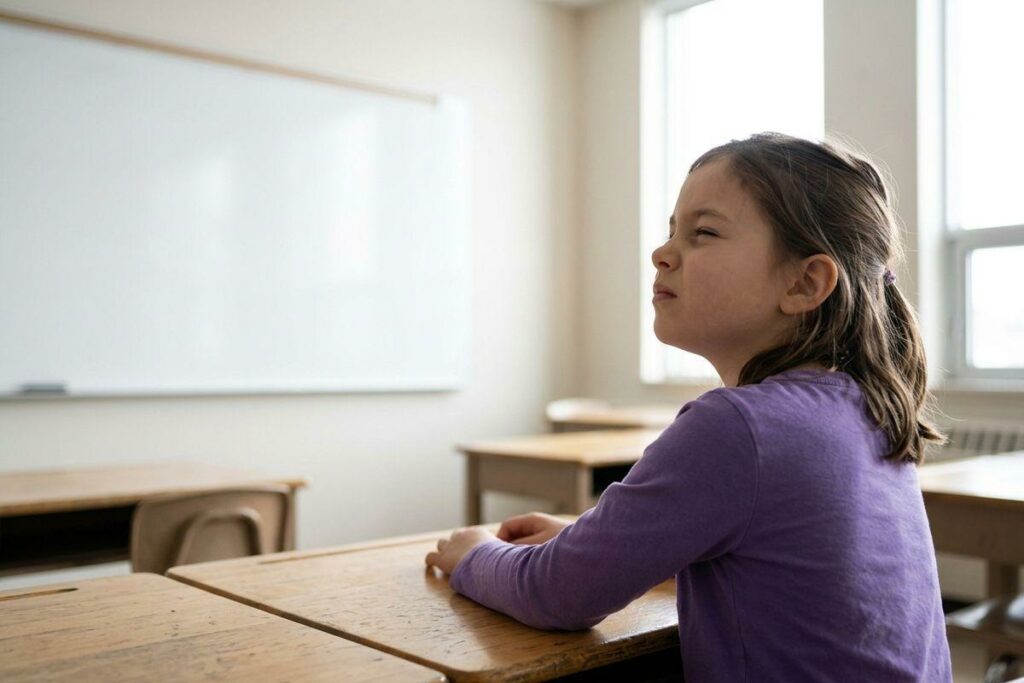
Kids rarely announce that things look blurry. They squint, lean in, and assume everyone sees the world the way they do. Watch for a few of these:
- Squinting at the classroom board or the TV
- Sitting unusually close to screens
- Headaches that show up after school
- Rubbing their eyes often
- Backing away from sports or activities that need good distance vision
Why Slowing Myopia Progression Matters Later
Slowing the change now can mean a lower prescription by the time your child reaches adulthood, and that goes well beyond thinner lenses. Higher amounts of myopia are linked to a greater risk of retinal detachment, glaucoma, and cataract later in life.
Can Myopia Be Reversed or Stopped?
Myopia can’t be undone, and kids don’t outgrow it. That’s the honest starting point, and it’s why treatment aims at slowing the change instead.
Standard single vision lenses, the kind in most children’s glasses, sharpen distance vision without doing anything about how quickly the prescription climbs. Myopia control treatments are built for that second job.
Myopia Control Options for Children
Your optometrist may suggest one of several approaches, and each one looks a little different in daily life.

Myopia Control Glasses
These look like regular glasses but use a special lens design that changes how light focuses toward the edges of the eye. Kids wear them full time. For younger children who aren’t ready to handle contact lenses, they’re often a simple place to start.
Soft Contact Lenses
Daytime soft lenses can suit active kids who play hockey or soccer, or anyone tired of glasses sliding down a sweaty nose. They go in each morning and come out at night. Many are single-use, so there’s no cleaning routine to remember.
Ortho-K
Ortho-K works overnight. Your child wears rigid lenses to bed, takes them out in the morning, and goes through the day without glasses. This option involves more follow-up visits, and careful cleaning and handling matter here because overnight wear carries a higher risk of infection.
Low-Dose Atropine Drops
The routine is simple: one drop at bedtime. Low-dose atropine doesn’t sharpen distance vision on its own, so your child still wears glasses during the day. It can be a good match for kids who aren’t keen on contact lenses.
Daily Habits That Support Your Child’s Vision
Small changes at home can back up whatever treatment your child uses. Try working these into the week:
- Get outside for an hour or more each day, whether that’s the park, the backyard, or the walk to school
- Set up device-free zones, like the dinner table or bedrooms, to keep screen time in check
- Use the 20-20-20 rule during homework, looking at something 20 feet away for 20 seconds every 20 minutes
- Keep reading areas well lit so your child isn’t squinting through their assignments
- Hold books and tablets at about elbow distance instead of right up against the face
Eye Exams That Track Your Child’s Myopia
A first eye exam around 6 months of age gives your optometrist a baseline, followed by another before your child starts school. Regular checkups after that show how much the prescription changes from year to year.
Ready to Slow Your Child’s Myopia?
There’s no single right answer for every kid, so the conversation starts with an exam and a clear picture of how quickly things are changing. Come in with your questions, whether that’s about screen time at home or whether your child can handle contact lenses yet.
Our optometrists at The Eye Studio by Kennedy Eye Clinic can help you weigh the options and build a plan around your child’s routine. Book an appointment, and we’ll take it from there.