
Key Takeaways
- Myopia means close objects look clear while distant ones appear blurry.
- Family history plays a big role in a child’s risk for developing myopia.
- Screen time and limited time outdoors can increase that risk.
- Myopia often starts during school-age years and settles as the eyes stop growing, usually by the early twenties.
- An optometrist in Saskatoon can review family history and share ways to slow progression.
Maybe your child just got their first prescription, and you’re wondering whether your own need for glasses had something to do with it. Or maybe your child has been inching closer towards the TV, and you remember doing something similar at that age. At The Eye Studio by Kennedy Eye Clinic, we know one of the most common questions parents have is whether myopia (nearsightedness) is genetic.
Myopia is partly genetic, but daily habits and early eye care shape how much it progresses. Family history raises your child’s risk of needing glasses, but that doesn’t mean they’re destined to have blurry vision. Bringing your child in for regular eye exams and knowing the signs of a vision problem can help you support their eyes.
What Myopia Means for Your Child’s Eyes
Myopia, also called nearsightedness, means close objects look clear while faraway things blur. This means that your child may be able to read a book on their lap without trouble, but the whiteboard at school or the street sign down the block will look blurry.
Myopia can happen when the eyeball grows a little too long from front to back, causing light to land in front of the retina (the back of the eye) instead of directly on it. As your child grows, so do their eyes, which can make their prescription grow stronger.
Rates are climbing among people around the world, so more and more parents are asking about myopia every year.
How Family History Shapes Myopia Risk
Genes influence the shape and growth of the eye, which helps explain why myopia often runs in families. So if one or both parents are nearsighted, it increases a child’s risk.
It’s important to know that family history doesn’t decide everything. There are other factors that can increase the risk of myopia, but genes can give parents a useful starting point. If you have nearsightedness, and your child begins squinting to see distant objects, it can be a good indication that it’s time to bring them in for an eye exam.
Is Myopia Inherited from Mom or Dad?
Either parent can pass along the risk, so it isn’t tied to just 1 side of the family. When both parents wear glasses for distance, the chances rise the most. Knowing your own vision history helps the eye doctor build a fuller picture of your child.
Why Daily Habits Matter Just as Much
Screen Time and Close-Up Focus
Tablets, phones, and homework keep the eyes locked on something very close by for hours on end. That kind of constant near work can strain young eyes. Research suggests prolonged near work may contribute to myopia development and progression in some children.
Time Spent Outdoors
Sunlight and outdoor time are important for developing eyes. Both have been associated with a lower risk of myopia development in children, so it’s a good idea for parents to encourage outdoor time as much as possible.
We often recommend aiming for 1 to 2 hours outside each day. A bike ride, a walk to the park, or playing outside are all great ways to increase your child’s outdoor time.
When Myopia Shows Up and How It Progresses
Myopia often begins during the school-age years, between 6 and 12. From there, their prescription tends to shift year by year and usually settles by the late teens or early twenties, when the eyes have stopped growing.
It’s important to catch myopia early, as the earlier it develops, the more opportunity there is for it to progress during childhood. That’s why regular eye exams during childhood are so useful.
Signs to Watch for at Home
Parents often spot the first clues before your child notices. This is because children don’t always know their vision is blurry. If you notice your child doing any of the following, it may be a good idea to book a visit:
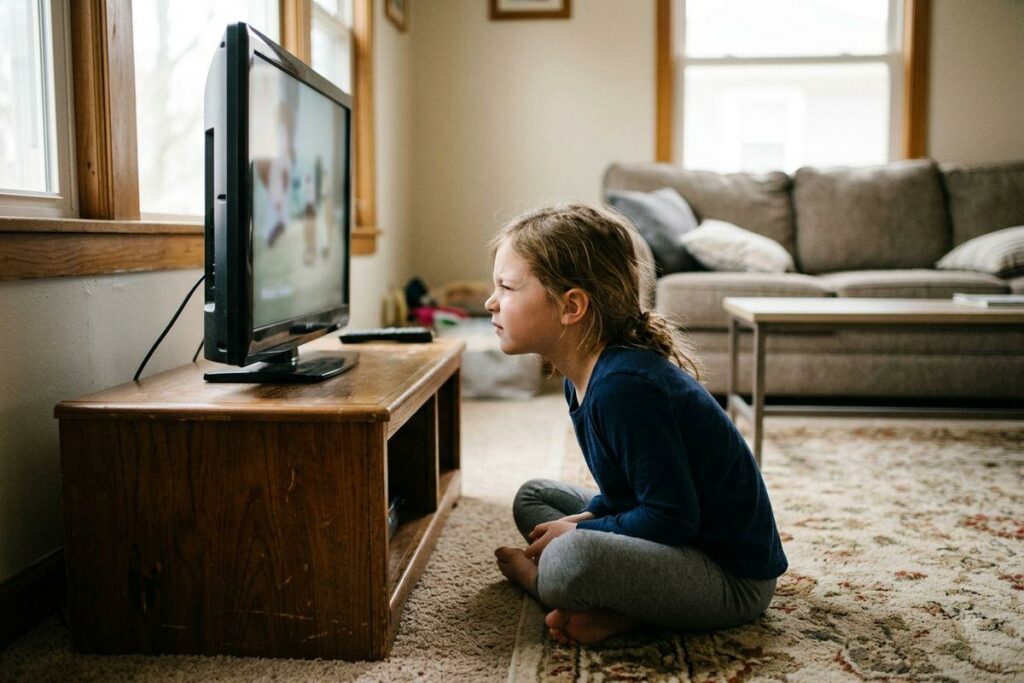
- Squinting at the TV or sitting very close to screens.
- Complaints about blurry chalkboards, whiteboards, or road signs.
- Frequent eye rubbing or headaches after school.
How an Optometrist in Saskatoon Can Help
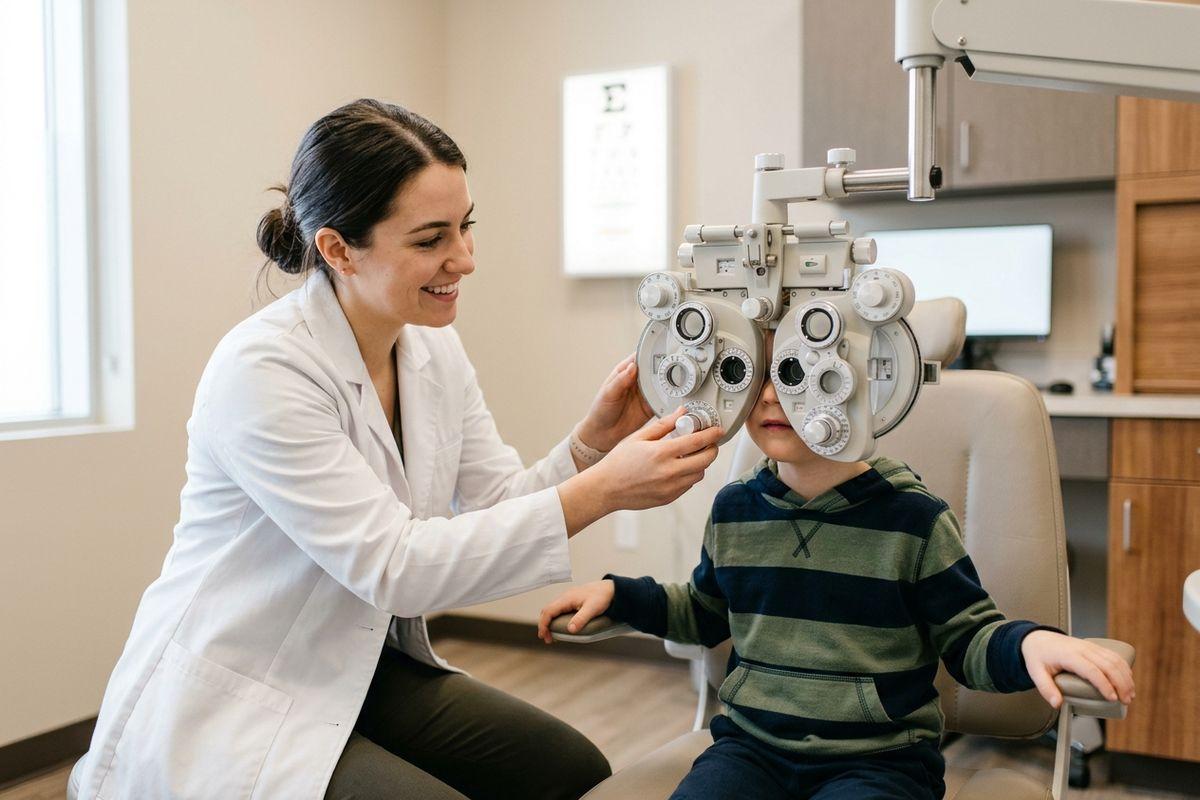
A thorough eye exam does more than measure a prescription. Our optometrist can review your family’s vision history, check how your child’s eyes are growing, and track any changes over time.
You’ll also get practical habit tips you can use at home. One favourite is the 20-20-20 rule, where every 20 minutes of close work, your child looks at something 20 feet away for 20 seconds. It gives tired eyes a quick reset during homework or gaming.
Myopia Control
For kids whose prescriptions keep getting stronger, there are options for myopia control. This treatment is designed to help slow the progression of myopia in kids, helping them to end up with a lower prescription by the time their eyes are done growing. This can include options like special contact lenses, glasses designed to slow progression, and low-dose atropine eye drops. Our team can discuss with your family what may work for your child’s needs.
Schedule Your Child’s Eye Exam
At The Eye Studio by Kennedy Eye Clinic, we are committed to treating your family with genuine care, warmth, and service. If you’re curious about myopia control for your child, we’d love to help. Book them in for an eye exam today and take the guesswork out of what comes next.